
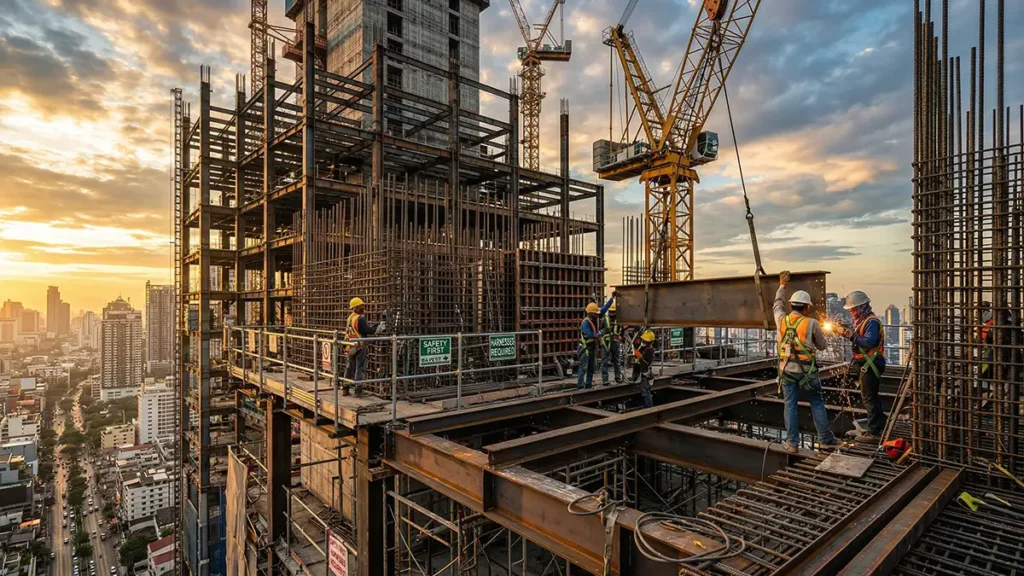
When you look at modern cities, highways, and skyscrapers, there’s one material that holds it all together:
Steel.
But why does steel remain the go-to material for modern construction, even with a variety of alternatives available today?
The answer lies in its strength, versatility, and long-term durability. From high-rise buildings to infrastructure projects, steel in construction has proven to be an indispensable choice. Let’s explore the many reasons why steel structures are the backbone of the modern construction industry.
1. Steel’s Strength and Load-Bearing Capacity
The primary reason steel is the most preferred construction material is its tensile strength.
Key Advantages:
- High Load-Bearing Capacity: Steel can bear significantly more weight than many other materials used in construction. This makes it an ideal choice for high-rise buildings, bridges, and heavy-duty industrial structures.
- High Strength-to-Weight Ratio: Steel is incredibly strong, yet lightweight in comparison to materials like concrete. This means less bulk for the same strength, reducing the overall load on foundations and structures.
2. Durability of Steel: Built to Last
One of the most critical aspects of modern construction is long-term performance. Steel’s durability is what gives it an edge over materials like wood or even concrete in certain applications.
Why Steel Stands the Test of Time:
- Corrosion Resistance: Modern steel, like TMT bars, is manufactured to be resistant to rust and corrosion, making it ideal for humid and coastal regions.
- Fire Resistance: Steel can withstand high temperatures without losing its shape, which is crucial in areas prone to fires.
- Minimal Maintenance: Unlike other materials that might need frequent repairs or replacement, steel structures maintain their integrity with minimal intervention.
Source: The corrosion-resistant properties of TMT bars come from advanced metallurgical processes, ensuring a longer lifespan and structural integrity in challenging conditions.
3. Flexibility and Versatility in Design
Steel offers unparalleled design flexibility, making it the material of choice for innovative and complex construction projects.
How Steel Enables Creativity:
- Customizable Shapes and Sizes: Steel can be molded and welded into almost any shape, which gives engineers and architects more flexibility in design.
- Efficient Use of Space: Steel structures allow for larger open spaces within buildings, reducing the need for internal columns or support beams.
- Quick Construction: Steel components can be prefabricated off-site, speeding up the construction process and ensuring less material waste.
4. Sustainability: Steel is 100% Recyclable
In today’s green building era, sustainability is more important than ever.
How Steel Contributes to Sustainable Construction:
- Recyclability: Steel is 100% recyclable without compromising its quality. Unlike other materials, steel does not lose its properties when recycled, making it a sustainable option for construction.
- Energy-Efficient Production: Advances in steel manufacturing have significantly reduced the energy consumption involved in producing steel. The steel industry has made considerable strides in reducing carbon emissions.
- Longevity Reduces Waste: Steel’s long lifespan means fewer repairs and replacements, contributing to less waste in landfills.
5. TMT Bar Advantages in Construction
When it comes to reinforced concrete, TMT (Thermo-Mechanically Treated) bars are the gold standard for modern construction.
Why TMT Bars Stand Out:
- Corrosion Resistance: TMT bars are specially designed to resist corrosion, making them ideal for use in coastal and humid regions. This feature helps in maintaining the structural integrity of buildings over time.
- High Ductility: TMT bars are highly ductile, meaning they can bend without breaking, an essential property for structures built in earthquake-prone zones.
- Increased Strength: Through the LRF (Ladle Refining Furnace) process, TMT bars achieve superior strength and durability, ensuring your structures remain strong under heavy loads and stress.
6. Steel Structures and Construction Safety
Safety is always a top priority when it comes to construction. Steel’s inherent properties ensure that buildings can withstand adverse conditions, including earthquakes, high winds, and extreme weather.
Key Reasons Steel Enhances Safety:
- Seismic Resistance: Steel’s flexibility and strength make it the most suitable material for buildings in seismic zones.
- Weather Resistance: Steel structures can handle heavy winds and extreme temperatures without compromising safety.
- Fire Resistance: Steel does not burn like timber, and it retains its strength under fire conditions longer than most materials.
7. Steel in Infrastructure Projects
Steel is not just limited to residential construction — it plays a key role in large infrastructure projects, such as:
- Bridges
- Flyovers
- Dams
- Industrial plants
These structures require high-strength materials that can withstand dynamic forces, load variations, and extreme environmental conditions and steel delivers on all fronts.
Conclusion: Steel- The Backbone of Modern Construction
Steel has been the backbone of construction for centuries, and its role is only becoming more significant as we build smarter, stronger, and more sustainable structures.
When you choose steel, you are ensuring:
- durability
- strength
- safety
- environmental responsibility
So, whether you’re building a home, a bridge, or an industrial facility, steel remains the strongest choice for modern construction. And when you choose ET TMT bars, you’re ensuring that your project is backed by the best quality, strength, and performance available in the market.