
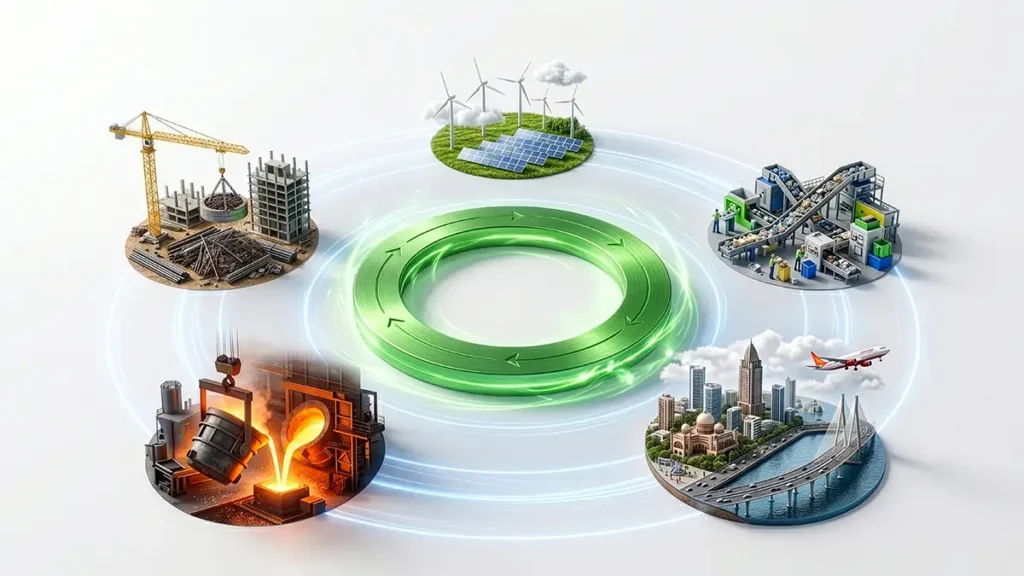
Steel has long been the foundation of modern civilization. From towering skyscrapers and highways to automobiles and renewable energy infrastructure, it plays an indispensable role in shaping economies and enabling growth. However, as the world moves toward a more sustainable future, the steel industry faces a critical challenge – reducing its environmental impact without compromising performance.
This is where green steel becomes not just relevant, but essential.
Understanding Green Steel
Green steel refers to steel produced using low-carbon or carbon-neutral processes, significantly reducing greenhouse gas emissions compared to conventional steelmaking methods.
Traditional steel production relies heavily on coal-based blast furnaces, which release large amounts of carbon dioxide during the reduction of iron ore. In contrast, green steel leverages cleaner technologies such as:
- Renewable energy-powered manufacturing
- Hydrogen-based iron reduction
- Electric arc furnaces (EAF) using recycled scrap
- Energy-efficient induction furnace technologies
The goal is simple yet powerful: deliver the same high-quality steel while drastically lowering environmental impact.
The Environmental Cost of Conventional Steel
To understand why green steel matters, it’s important to recognise the scale of the problem.
The steel industry is responsible for approximately 7 – 8% of global carbon emissions, making it one of the largest contributors to climate change. The conventional steelmaking process:
- Consumes massive amounts of fossil fuels
- Emits significant CO₂ during iron ore reduction
- Produces pollutants that affect air quality
- Requires energy-intensive operations
With global demand for steel expected to grow, continuing with traditional methods is not a sustainable option.
Why Green Steel is a Game Changer
1. Driving Decarbonisation Across Industries
Steel is deeply embedded in sectors like construction, automotive, infrastructure, and energy. By switching to green steel, these industries can significantly reduce their carbon footprint.
This makes green steel a multiplier solution – its impact extends far beyond the steel industry itself.
2. Supporting Global Climate Goals
Countries worldwide have committed to achieving net-zero emissions over the coming decades. Without transforming steel production, these targets will be difficult – if not impossible – to achieve.
Green steel enables:
- Lower Scope 1 and Scope 2 emissions for manufacturers
- Reduced Scope 3 emissions for end users
- Alignment with ESG and sustainability benchmarks
3. Meeting Evolving Market Demand
Today’s consumers, investors, and regulators are increasingly conscious of sustainability. Businesses are actively seeking materials that align with their environmental commitments.
Green steel helps companies:
- Strengthen brand credibility
- Meet green building standards
- Qualify for sustainable infrastructure projects
- Attract ESG-focused investments
4. Ensuring Regulatory Readiness
Environmental regulations are becoming stricter across global markets. Carbon taxes, emissions trading systems, and sustainability disclosures are reshaping industrial operations.
Adopting green steel early allows companies to:
- Stay ahead of compliance requirements
- Reduce future financial risks linked to carbon pricing
- Build long-term operational resilience
5. Maintaining Performance Without Compromise
One of the biggest advantages of green steel is that its quality and strength remain unchanged. It offers the same:
- Structural integrity
- Durability
- Versatility
This means industries can transition to greener alternatives without sacrificing performance or reliability.
Key Technologies Enabling Green Steel
The evolution of green steel is being driven by a combination of innovative technologies:
Hydrogen-Based Steelmaking
Hydrogen replaces carbon in the reduction process, producing water vapour instead of CO₂. This has the potential to nearly eliminate emissions from primary steel production.
Electric Arc Furnaces (EAF)
EAFs use recycled steel scrap and electricity, significantly lowering emissions – especially when powered by renewable energy.
Induction Furnace Technology
Efficient induction furnace systems offer a cleaner alternative for steel production, especially when integrated with sustainable energy sources. They also provide better control over energy consumption and emissions.
Carbon Capture Technologies
Carbon capture, utilisation, and storage (CCUS) solutions help capture emissions from existing plants, reducing their environmental impact.
Renewable Energy Integration
Powering steel production with solar, wind, or hydro energy is a critical step toward achieving true green steel.
The Role of Recycling in Green Steel
Steel is one of the most recyclable materials in the world, and recycling plays a crucial role in reducing emissions.
Using scrap steel:
- Reduces the need for mining raw materials
- Saves energy compared to primary production
- Minimises waste and environmental degradation
Green steel production often relies heavily on recycled inputs, making it a key pillar of the circular economy.
Challenges in the Transition to Green Steel
Despite its advantages, the transition to green steel comes with challenges:
- High initial investment in new technologies
- Limited availability of green hydrogen
- Infrastructure gaps for renewable energy
- Cost competitiveness compared to traditional steel
- Need for industry-wide standardisation
However, as technology advances and demand increases, these challenges are gradually being addressed.
Opportunities for Industry Leaders
For forward-thinking companies, green steel is not just about compliance – it’s about leadership.
By investing in sustainable steelmaking, companies can:
- Differentiate themselves in a competitive market
- Build stronger relationships with environmentally conscious clients
- Enhance operational efficiency through innovation
- Contribute meaningfully to global sustainability efforts
The Way Forward
The future of steel lies in balancing performance, scalability, and sustainability. Green steel represents a critical step in this direction.
As industries evolve, collaboration between manufacturers, policymakers, and technology providers will be essential to scale green steel solutions effectively.
Conclusion
Green steel is more than an industry shift – it is a necessary transformation.
By reducing emissions, conserving resources, and supporting sustainable development, green steel enables industries to continue building the world – responsibly.
For companies committed to innovation and environmental stewardship, embracing green steel is not just an option. It is the path forward.