
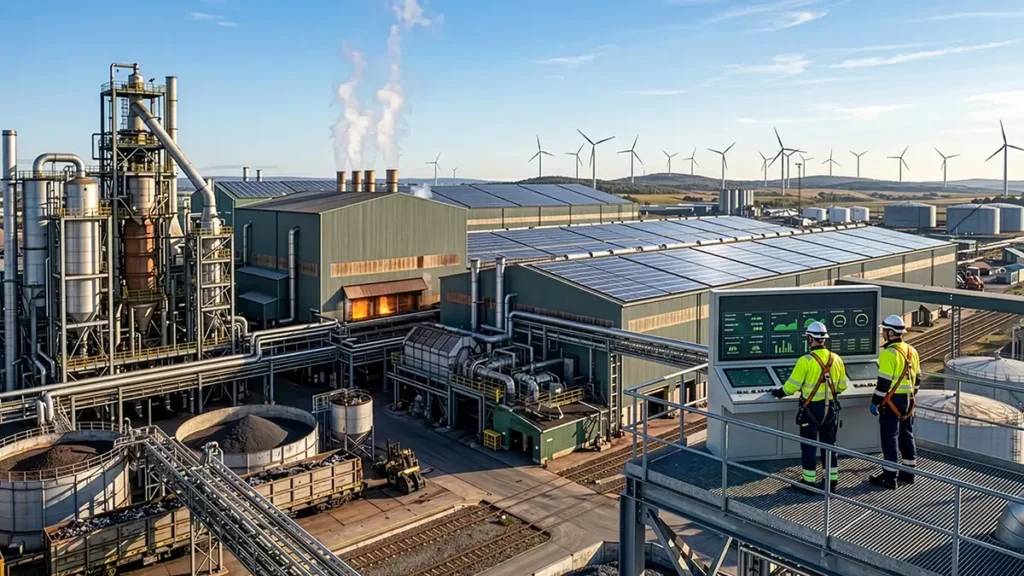
Steel is the backbone of modern infrastructure – from buildings and bridges to cars and appliances. But traditional steel production comes at a heavy environmental cost. This is where green steel comes in – a cleaner, more sustainable alternative shaping the future of the steel industry.
In this guide, we’ll break down what green steel is, how it’s made, and why it matters.
What is Green Steel?
Green steel refers to steel produced with significantly lower carbon emissions compared to conventional methods. Instead of relying on fossil fuels like coal, green steel uses cleaner technologies such as renewable energy and hydrogen-based processes.
In simple terms:
Same steel quality, but made in a more environmentally friendly way.
It’s important to note that green steel is not a different type of steel – it’s the same material, just produced using sustainable methods.
Why Do We Need Green Steel?
Traditional steel production is one of the largest industrial polluters.
- Produces ~7 – 8% of global CO₂ emissions
- Uses coal in blast furnaces
- Emits around 1.8 tonnes of CO₂ per tonne of steel
With growing pressure to achieve net-zero emissions, industries are shifting toward greener alternatives. Green steel plays a critical role in reducing the environmental footprint of construction, infrastructure, and manufacturing.
How is Green Steel Made?
Green steel is produced using cleaner technologies that replace fossil fuels. The most common methods include:
1. Hydrogen-Based Steelmaking
- Uses green hydrogen instead of coal to reduce iron ore
- Produces water instead of CO₂ as a byproduct
2. Electric Arc Furnaces (EAF)
- Uses recycled scrap steel
- Powered by renewable electricity
- Significantly lowers emissions compared to traditional methods
3. Renewable Energy Integration
- Solar, wind, or hydro energy replaces fossil fuel-based power
- Reduces overall carbon footprint of production
4. Carbon Capture & Alternative Technologies
- Captures CO₂ emissions during production
- Emerging technologies are improving efficiency and sustainability
Benefits of Green Steel
1. Lower Carbon Emissions
Green steel can reduce emissions by 20% to nearly 100%, depending on the process used.
2. Supports Sustainability Goals
Helps companies meet ESG targets and global climate commitments.
3. Same Strength & Quality
Maintains the same mechanical properties as conventional steel.
4. Circular Economy Friendly
Highly recyclable and reduces dependence on raw material extraction.
Challenges of Green Steel
While promising, green steel still faces a few hurdles:
- Higher production costs due to new technologies
- Limited availability at scale
- Dependence on renewable energy infrastructure
- Lack of standard definition across the industry
Applications of Green Steel
Green steel can be used anywhere traditional steel is used:
- Construction (buildings, bridges)
- Automotive and transportation
- Infrastructure (pipelines, railways)
- Renewable energy (wind turbines, solar structures)
The Future of Green Steel
The global steel industry is undergoing a transformation. As demand for sustainable materials grows, green steel is expected to become a mainstream solution.
With advancements in hydrogen technology, renewable energy, and recycling processes, green steel will play a key role in building a low-carbon future.
Final Thoughts
Green steel represents a major step toward sustainable industrial development. It offers the same strength and versatility as traditional steel – without the heavy environmental cost.
For businesses and manufacturers, adopting green steel isn’t just an environmental decision – it’s a strategic move toward future-ready production.