
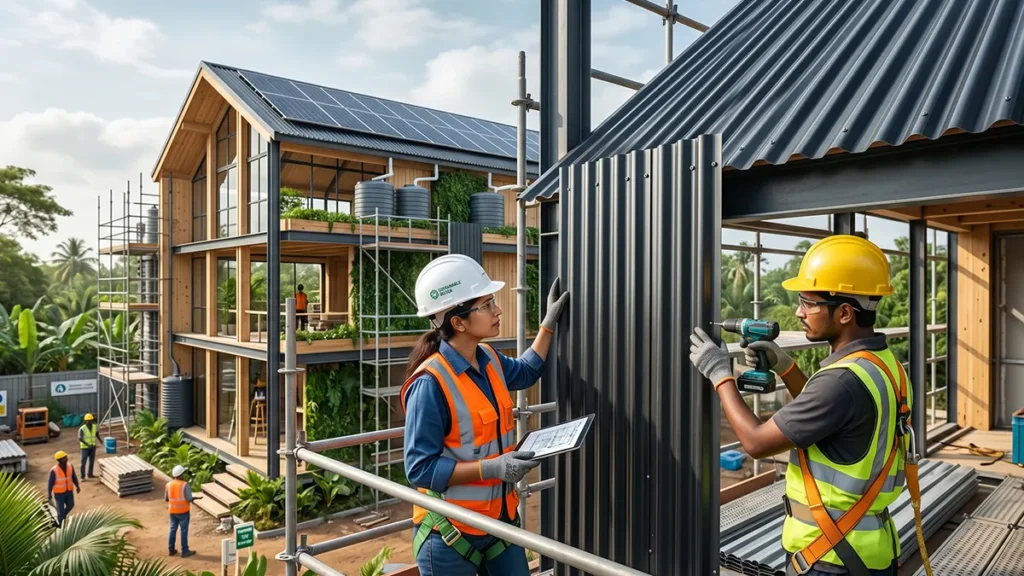
As sustainability becomes a priority in modern construction, builders, architects, and developers are increasingly choosing materials that offer durability, resource efficiency, and long-term value. Among these materials, corrugated sheets have emerged as a practical solution for eco-friendly building projects.
Widely used in industrial, commercial, agricultural, and residential construction, corrugated sheets provide reliable roofing and cladding while supporting sustainable construction goals. Their strength, longevity, recyclability, and efficient use of materials make them a preferred choice for projects focused on reducing environmental impact.
Understanding Sustainable Construction
Sustainable construction focuses on minimizing the environmental footprint of buildings throughout their lifecycle. This includes responsible material selection, efficient use of resources, reduced waste generation, lower energy consumption, and long-lasting building performance.
The choice of construction materials plays a major role in achieving these objectives. Materials that last longer, require less maintenance, and can be recycled at the end of their service life contribute significantly to greener construction practices.
What Are Corrugated Sheets?
Corrugated sheets are metal sheets formed into a repeating wave-like pattern. This corrugation increases structural strength and rigidity without requiring excessive material thickness.
They are commonly manufactured using steel and are widely used for:
- Roofing systems
- Wall cladding
- Industrial sheds
- Warehouses
- Agricultural buildings
- Commercial structures
Their design allows them to carry loads efficiently while remaining lightweight and durable.
Why Corrugated Sheets Support Sustainable Construction
1. Long Service Life Reduces Material Consumption
One of the most important aspects of sustainable construction is durability. Building materials that remain functional for decades reduce the need for replacement and reconstruction.
Corrugated metal sheets are known for their long lifespan when properly installed and maintained. Their resistance to weather exposure, corrosion (when coated appropriately), and structural wear helps extend the life of buildings and reduces the demand for new materials over time. This lowers the overall environmental impact associated with manufacturing, transportation, and installation.
2. Recyclability Supports Circular Economy Goals
Steel is among the most recycled materials in the world. Corrugated steel sheets can be recycled at the end of their useful life and reprocessed into new steel products without significant loss of material quality. This helps reduce landfill waste and decreases dependence on virgin raw materials.
For sustainable construction projects, recyclability is an important consideration because it supports a circular economy where materials remain in use for longer periods.
3. Lightweight Design Reduces Transportation Impact
Corrugated sheets offer excellent strength-to-weight performance. The corrugated profile increases rigidity, allowing manufacturers to achieve structural performance with relatively less material.
Their lightweight nature simplifies transportation and installation. Lower transportation loads can contribute to reduced fuel consumption and lower emissions during project execution.
4. Improved Energy Efficiency
Modern corrugated roofing systems can be paired with reflective coatings and insulated roofing assemblies that help manage heat transfer within buildings.
Reflective metal roofing systems can reduce heat absorption, which may contribute to lower cooling requirements in certain climates. This supports energy-efficient building design and helps improve occupant comfort.
5. Lower Maintenance Requirements
Materials that require frequent repair or replacement create additional resource consumption throughout a building’s lifecycle.
Corrugated steel sheets are valued for their durability and relatively low maintenance requirements. Their ability to withstand harsh environmental conditions can reduce maintenance-related resource usage over time.
Corrugated Sheets and Modern Green Building Projects
Green building frameworks emphasize resource efficiency, durability, recyclability, and lifecycle performance. Corrugated sheets align well with these principles because they:
- Deliver long-term structural performance
- Generate less replacement waste over time
- Support recycling initiatives
- Contribute to efficient building envelope design
- Reduce material usage through optimized structural strength
For industrial facilities, warehouses, manufacturing units, agricultural structures, and commercial buildings, corrugated sheets continue to be a practical solution that balances performance with environmental responsibility.
The Importance of Strong Structural Foundations
While roofing and cladding materials contribute to sustainable construction, the structural framework remains equally important. A building designed for long-term performance requires high-quality reinforcement materials that provide strength, durability, and resilience.
This is where TMT bars play a critical role.
High-quality TMT bars help create structures that can withstand environmental stresses and maintain their performance over extended periods. Durable construction reduces the need for premature repairs, reconstruction, and resource-intensive maintenance activities. Sustainable construction is not only about choosing eco-friendly materials; it is also about building structures that stand strong for generations.
ET TMT, manufactured by Electrotherm, is engineered to deliver strength, reliability, and durability for residential, commercial, and infrastructure projects. The brand is widely used across critical construction applications where structural performance and long-term safety are essential.
Conclusion
Sustainable construction requires a thoughtful combination of durable materials, efficient design, and responsible resource utilization. Corrugated sheets contribute to this approach through their longevity, recyclability, lightweight structure, and potential to support energy-efficient building designs.
As the construction industry continues to focus on reducing environmental impact, materials that combine performance with sustainability will remain central to modern building practices. Alongside reliable roofing and cladding solutions, strong structural reinforcement using quality TMT bars helps ensure that buildings are not only environmentally conscious but also built to last.
By combining sustainable material choices with durable structural systems, the construction industry can move closer to creating resilient and resource-efficient infrastructure for the future.