
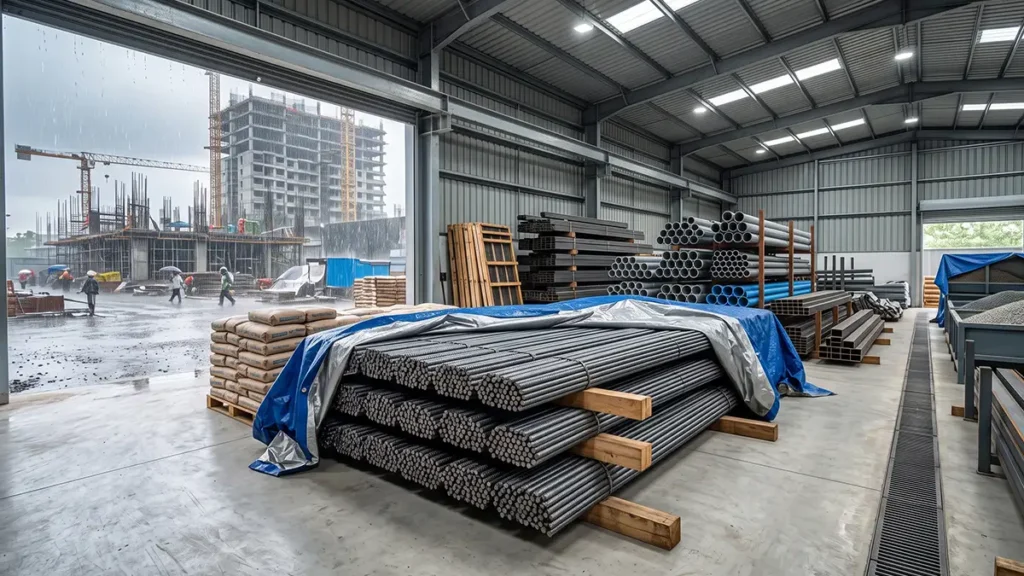
Every home, office, factory or infrastructure project begins with a dream. Then come the drawings, approvals, budgets and materials. Cement arrives first. TMT bars are unloaded. Bricks, aggregates, timber, tiles and fittings start filling the site. At this stage, one small mistake can quietly affect the entire project.
Rainwater can damage cement. Mud and oil can contaminate steel reinforcement. Aggregates can mix with soil. Bricks can break when dumped carelessly. Timber can bend, crack or absorb moisture. These issues may look small during daily site work, yet they can lead to wastage, delays, extra cost and quality concerns.
Protecting building materials during construction is not a decorative task. It is basic site discipline. When materials are stored well, the work moves faster, the site stays safer and the structure gets a better foundation to perform as planned.
Why Material Protection Matters During Construction
A construction site is an open, active environment. Materials face heat, dust, rain, humidity, ground moisture, vehicle movement, labour handling and repeated shifting. Without proper planning, even good-quality materials can lose their fitness for use.
Good construction material storage helps in four simple ways:
It protects material quality before use.
It reduces breakage, rusting, dampness and contamination.
It keeps the site cleaner and safer for workers.
It helps control wastage and avoid unnecessary repurchase.
For a structure, the right material matters. The way that material is stored matters too. Buying quality TMT bars, cement or aggregates is the first step. Protecting them on site is the next step.
Start With a Planned Storage Layout
Before materials arrive, the site team should decide where each material will be stored. This saves confusion later.
Keep cement in a dry, covered storage area. Keep TMT bars on raised supports, away from mud, oil and standing water. Keep fine and coarse aggregates in separate stockpiles. Keep bricks close to the work area, stacked properly instead of dumped. Keep paints, chemicals and flammable items in a safe, separate space.
The storage layout should allow easy vehicle movement, safe unloading, worker access and clear walkways. Passageways, stairways and emergency routes should stay free from materials and waste. A cluttered site slows down work and increases the chance of slips, trips and damage.
A simple rule works well: every material should have a marked place, and every worker should know where it belongs.
How to Store Cement Safely on Site
Cement is highly sensitive to moisture. Once dampness enters the bag, cement can develop lumps and lose usability. That is why cement needs extra care at site.
Store cement bags inside a dry, leakproof and moisture-resistant shed. Keep doors closed as far as possible and avoid unnecessary openings that allow damp air or rain spray inside. Never place cement bags directly on the floor. Use wooden planks or a raised platform so the bags stay clear of ground moisture.
Keep cement stacks away from walls. Leave enough space for inspection and air control. Keep bags close together in stacks to reduce air circulation. Avoid very high stacks, as pressure can cause lump formation in the lower bags. Use older cement first by marking the date of receipt on each stack.
During monsoon or long storage periods, cover cement stacks with waterproof sheets or membranes. Make sure the cover is secure and undamaged. If any bag has hardened lumps, do not mix it blindly into work. Ask the site engineer to inspect it before use.
How to Store TMT Bars and Steel Reinforcement
TMT bars form the backbone of reinforced concrete structures. Their surface condition matters because steel needs proper bonding with concrete. Mud, oil, grease, loose rust and heavy contamination can affect that bond.
Store TMT bars on wooden sleepers, platforms, skids or other raised supports. Keep them off the ground to reduce contact with moisture and soil. Avoid storing bars in puddles, wet areas or places where curing water flows across the ground.
Separate bars by size, grade and length. This makes cutting, bending and issue easier while reducing wastage. Keep identification tags visible so the right bars are used in the right location. Avoid dragging bars through mud or oil. During unloading, use proper lifting and support so the bars do not bend, sag or get damaged.
For long storage, coastal areas or high-humidity locations, extra protection is useful. Bars should be covered in a way that protects them from direct rain while allowing ventilation. A fully sealed cover that traps moisture can create another problem, so use practical site judgment.
ET TMT offers different TMT bar options, including CRS TMT bars and epoxy-coated TMT bars, as listed on the brand’s official product pages. For projects exposed to moisture, marine conditions or corrosive environments, the choice of reinforcement should be discussed with the project engineer and supplier. Even corrosion-resistant steel needs proper handling and storage at site.
How to Protect Aggregates
Aggregates look tough, yet they can get contaminated quickly. Soil, clay, dust, leaves, plastic waste or mixed material can affect concrete quality.
Store aggregates on a hard, dry and level patch of ground. If the site does not have such a surface, create a platform using planks, old corrugated sheets, brick flooring or lean concrete. This helps prevent mixing with soil and foreign matter.
Keep fine aggregates and coarse aggregates in separate piles. On larger sites, use dividing walls or compartments. Fine aggregates should be stored where wind loss is low. Avoid placing aggregate piles near drainage water, waste areas or heavy vehicle mud tracks.
The cleaner the aggregate, the cleaner the concrete mix process becomes.
How to Store Bricks and Blocks
Bricks and blocks are often mishandled because they appear simple. Dumping them in heaps leads to breakage, chipped edges and wastage.
Stack bricks in regular tiers as soon as they are unloaded. Keep different types and sizes separate. Place stacks on dry, firm ground. Keep enough space between stacks for inspection, counting and movement. Avoid unloading bricks roughly from trucks, as damaged edges can affect masonry finish and increase waste.
Blocks should also be stacked carefully in regular tiers. Avoid using under-cured blocks before they are ready for construction. If blocks from different batches or curing stages arrive at site, stack them separately and mark them clearly.
How to Store Timber, Doors and Windows
Timber can warp, crack or absorb moisture when stored carelessly. Store timber on raised supports, keeping it clear of ground moisture. Use battens between layers so air can move through the stack. Protect timber from direct sun, rain and hot dry winds.
Doors, windows and ventilators need surface protection. Avoid dragging them against each other, especially finished or decorative surfaces. Store them on level supports and cover them from loose cement, mortar and dust. If they arrive in crates, follow the manufacturer’s storage instructions and open the crates close to the time of use.
Keep Paints, Chemicals and Flammable Materials Separate
Paints, solvents, fuel, adhesives and other chemicals need careful storage. Keep them away from cement, timber, welding areas, open flames and direct heat. Use labelled containers and follow the manufacturer’s safety instructions.
Create a separate chemical storage area where leakage, fire risk and accidental mixing can be controlled. Keep the area ventilated, secured and away from regular worker movement. Never leave chemical containers open after use.
Monsoon Protection for Construction Materials
Indian construction sites often face sudden weather changes. Monsoon planning should begin before the first heavy rain.
Check that cement storage sheds are leakproof. Raise materials above ground level. Cover TMT bars, timber and finished items from direct rain. Keep aggregate stockpiles away from water flow. Improve drainage around storage areas so water does not collect under materials.
Tarpaulin sheets should be tied properly. Loose covers can fly away in strong wind or allow water to seep in from the sides. After heavy rain, inspect every storage zone before work starts. Small checks can prevent bigger site mistakes.
Daily Site Checklist for Material Protection
Use this simple checklist at the start or end of each working day:
Are cement bags dry, covered and raised from the floor?
Are TMT bars stored off the ground and away from mud, oil and water?
Are steel bars separated by size, grade and length?
Are fine and coarse aggregates stored separately?
Are bricks and blocks stacked properly instead of dumped?
Are timber and doors protected from rain, sun and ground moisture?
Are paints, solvents and chemicals stored in a safe, labelled area?
Are walkways, stairways and access routes free from material clutter?
Are damaged or contaminated materials kept aside for inspection?
Are new material deliveries placed in the right storage area immediately?
This checklist is simple enough for daily use and strong enough to prevent many common site problems.
Choosing the Right Material Partner
Site protection begins after delivery, yet quality begins much earlier. TMT bars should come from a reliable manufacturer with consistent processes, testing and product options suited to different construction needs.
ET TMT’s official website highlights its focus on Thermo-Mechanically Treated bars, quality-led manufacturing, CRS TMT bars, refined steel TMT bars, superior quality steel TMT bars, cut and bend TMT bars and epoxy-coated TMT bars. The brand also highlights quality testing and process control across its manufacturing setup.
For builders, contractors and homeowners, this makes one thing clear: choose the right reinforcement, then protect it properly on site. Good material and good handling work together.
Conclusion
A building is more than concrete, steel and brick. It carries savings, trust, ambition and years of planning. Protecting building materials during construction is one of the simplest ways to respect that investment.
Keep cement dry. Keep TMT bars clean and raised. Keep aggregates separate. Stack bricks and blocks properly. Protect timber and finished items from moisture and impact. Keep the site organised every day.
Strong structures begin with strong choices. With the right material, careful storage and disciplined site handling, your dream gets the protection it deserves from day one.