
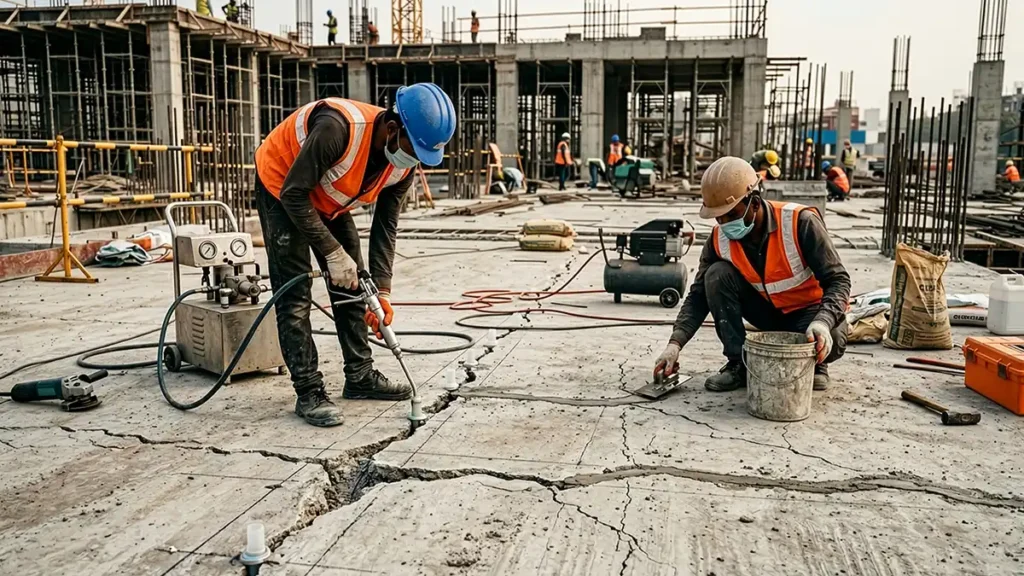
How to Repair Concrete Cracks: Methods, Materials & Tips
Concrete is known for its strength and durability, but cracks can still appear over time. These cracks may develop due to shrinkage, temperature changes, settlement, heavy loads, water seepage or corrosion of reinforcement. While some cracks are only surface-level, others may indicate deeper structural concerns.
Concrete crack repair is not only about improving the look of the surface. It helps protect the structure from moisture, corrosion and further damage. The right repair method depends on the type, size, depth and cause of the crack.
Common Causes of Concrete Cracks
1. Drying Shrinkage
Concrete can shrink slightly as it dries. When this movement is restricted, cracks may appear on the surface.
2. Temperature Changes
Concrete expands and contracts with heat and cold. Repeated movement can lead to cracks, especially in exposed areas.
3. Settlement
Uneven soil settlement below the concrete can create cracks in floors, slabs, foundations and pavements.
4. Overloading
When concrete carries more load than it was designed for, stress cracks can develop.
5. Corrosion of Steel Reinforcement
In reinforced concrete, steel bars add strength. If moisture reaches the reinforcement, corrosion may begin. As steel rusts, it expands and can cause cracking or spalling.
Types of Concrete Cracks
Before choosing a repair method, it helps to understand the type of crack.
Hairline cracks are very fine cracks, often seen on concrete surfaces.
Shrinkage cracks appear as concrete dries and loses moisture.
Settlement cracks occur when the ground below the concrete moves unevenly.
Structural cracks may appear in beams, columns, slabs or foundations and need careful inspection.
Water-leaking cracks allow moisture to pass through and may need waterproofing-focused repair.
Concrete Crack Repair Methods
1. Epoxy Injection
Epoxy injection is used for stable cracks where bonding and strength restoration are needed. In this method, epoxy resin is injected into the crack so it can fill the gap and bond the concrete sections together.
This method is commonly used for structural cracks in slabs, beams and columns. It works better when the crack is dry and not actively moving.
2. Routing and Sealing
Routing and sealing is a simple repair method for non-structural cracks. The crack is slightly widened, cleaned and filled with a suitable sealant.
It is often used for floors, pavements, slabs and surface cracks. This method helps reduce water entry but does not restore structural strength.
3. Gravity Filling
Gravity filling is used for fine cracks on horizontal surfaces. A low-viscosity resin is poured over the crack, allowing it to flow inside naturally.
It is suitable for stable cracks in floors and slabs where the material can penetrate properly.
4. Polyurethane Injection
Polyurethane injection is useful for cracks with water leakage. The material expands inside the crack and helps block water movement.
This method is often used in basements, retaining walls, water tanks and other damp areas. It is mainly used for sealing rather than structural strengthening.
5. Cement Grouting
Cement grouting is used for wider, stable cracks or voids. A cement-based mixture is filled into the crack to restore the surface and reduce gaps.
It is a practical option for non-moving cracks but may not work well for very fine cracks.
6. Stitching
Stitching is used when a crack needs additional support. Holes are drilled on both sides of the crack, and steel bars or staples are fixed across it with a bonding material.
This method is generally used for structural repair under expert guidance.
Materials Used for Concrete Crack Repair
Epoxy Resin
Epoxy resin provides strong bonding and is used for stable structural cracks.
Polyurethane Resin
Polyurethane helps seal water-leaking cracks and offers flexibility.
Cement-Based Grout
Cement grout is used for wider cracks and void filling.
Polymer-Modified Mortar
This material is used for patch repair and surface restoration.
Flexible Sealants
Sealants are suitable for surface cracks and areas where slight movement may occur.
Repair Mortar
Repair mortar is used to restore damaged concrete surfaces and cover spalled areas.
Basic Steps in Concrete Crack Repair
Step 1: Inspect the Crack
Check the crack width, location, depth and direction. Look for water leakage, rust stains or exposed reinforcement.
Step 2: Understand the Cause
A crack may return if the reason behind it is ignored. Settlement, water seepage, corrosion or overloading may need separate attention.
Step 3: Clean the Crack
Remove dust, loose concrete, oil and dirt. A clean surface helps the repair material bond better.
Step 4: Choose the Right Material
Use epoxy for structural bonding, polyurethane for water leakage, sealant for surface cracks and grout for wider stable cracks.
Step 5: Apply the Repair
Fill, inject or seal the crack based on the selected method and site condition.
Step 6: Allow Proper Curing
Give the repair material enough time to set before the surface is used again.
Tips for Better Concrete Crack Repair
- Clean the crack properly before repair.
- Match the repair material with the crack type.
- Use flexible sealants for cracks with slight movement.
- Check for water leakage before filling the crack.
- Look for rust stains, as they may indicate reinforcement corrosion.
- Get expert advice for cracks in beams, columns, foundations or load-bearing areas.
How to Reduce Cracks in New Concrete Work
Good construction practices can help reduce the chances of cracks in new structures. Proper mix design, controlled water content, adequate curing, correct joint placement and quality reinforcement all play an important role.
In reinforced concrete, TMT bars help the structure handle tensile stress and improve durability. Using high-quality TMT bars can support long-lasting construction. In areas exposed to moisture or corrosive conditions, epoxy-coated TMT bars can offer added protection to the reinforcement.
ET TMT Bars from Electrotherm are designed for strength, reliability and durability across residential, commercial and infrastructure projects. For environments where corrosion protection is important, ET Epoxy-Coated TMT Bars can help provide an additional protective layer.
Final Thoughts
Concrete cracks are common, but the right repair method can help protect the structure and improve its service life. Minor surface cracks can often be sealed with repair mortar, grout or sealants. Structural cracks may need epoxy injection, stitching or expert repair. Water-leaking cracks may require polyurethane injection or waterproofing treatment.
For stronger and more durable construction, it is helpful to focus on proper workmanship, good curing and quality reinforcement from the beginning. A well-built structure with reliable steel reinforcement has a better chance of resisting damage and performing well over time.