
Steel has always been one of the most important materials in construction and infrastructure. From homes and bridges to industrial buildings and public projects, steel is valued for its strength, durability, flexibility and recyclability.
As industries become more conscious of environmental impact, the way steel is produced is also getting more attention. This is where green steel comes into the picture.
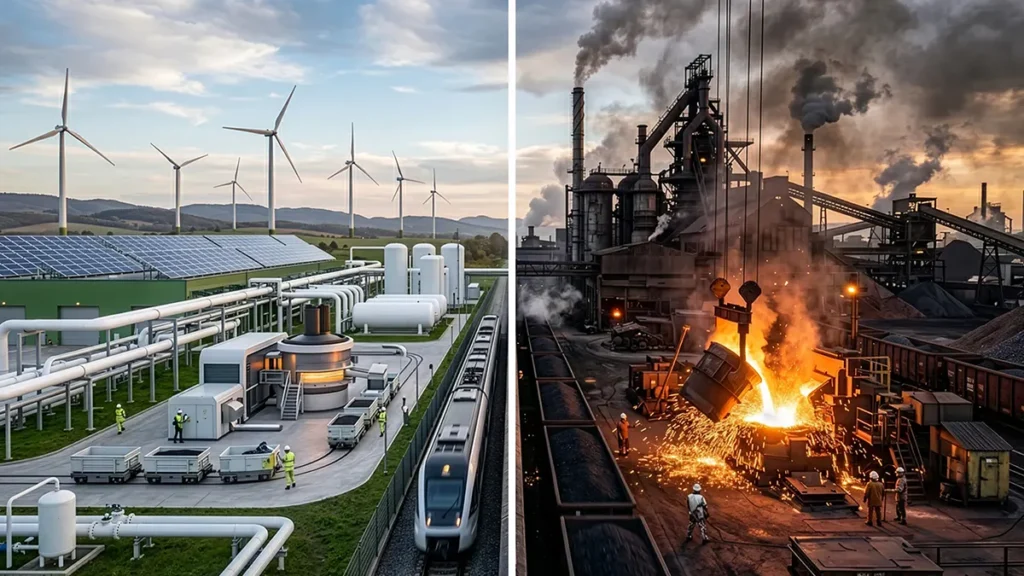
Green steel and traditional steel both serve important purposes. The key difference lies in how they are made, the energy sources used, and the carbon emissions involved in production.
What is Traditional Steel?
Traditional steel usually refers to steel produced through conventional methods that depend heavily on fossil fuels such as coal and coke. These processes have been used for decades and continue to support large-scale steel production across the world.
Traditional steel is strong, widely available and well understood by engineers, builders and manufacturers. It is used in buildings, bridges, railways, vehicles, machinery and many other applications.
The main concern with traditional steel is not its performance. The concern is its carbon-intensive production process, which releases a significant amount of carbon dioxide.
What is Green Steel?
Green steel refers to steel produced with lower carbon emissions compared to conventional steelmaking. It is not always completely carbon-free, so it is more accurate to understand it as low-carbon or reduced-emission steel.
Green steel can be made through different approaches, such as using renewable electricity, recycled scrap steel, green hydrogen, energy-efficient manufacturing systems and improved emission monitoring.
The aim is to reduce the environmental impact of steel production while maintaining the strength and quality expected from steel.
Green Steel vs Traditional Steel: Key Differences
1. Production Method
Traditional steel is commonly produced using coal-based processes and iron ore.
Green steel focuses on lower-emission methods. This may include electric arc furnaces powered by cleaner energy, higher use of recycled scrap steel, or hydrogen-based production routes.
2. Carbon Emissions
Traditional steel generally has a higher carbon footprint because fossil fuels play a major role in the process.
Green steel aims to reduce emissions by changing the energy source, raw material mix or production technology. The actual reduction depends on how the steel is produced and how clean the energy source is.
3. Raw Material Usage
Traditional steel often depends on iron ore and coal-based inputs.
Green steel may use more recycled steel scrap or cleaner input materials. Since steel is highly recyclable, this can support better resource efficiency and circular economy goals.
4. Energy Source
Traditional steel production is closely linked with fossil fuels.
Green steel depends more on renewable electricity, green hydrogen or other cleaner energy options. This makes the source of energy an important part of its environmental benefit.
5. Cost and Availability
Traditional steel is currently more widely available and often more cost-effective because its supply chain is mature.
Green steel is still developing in many markets. Its cost may be higher in the early stages due to technology, infrastructure and certification requirements. As production scales, availability and affordability may improve.
6. Certification and Transparency
Traditional steel is usually assessed through grade, strength, composition and performance standards.
Green steel adds another layer: verified emission intensity. Buyers may look for certification, production data or sustainability-related information before choosing it for specific projects.
Benefits of Green Steel
Lower Carbon Footprint
The biggest advantage of green steel is its potential to reduce carbon emissions during production. Since steel is used in large volumes across construction and infrastructure, even gradual emission reduction can make a meaningful difference.
Supports Sustainable Construction
Green steel can support construction projects that aim to reduce embodied carbon, meet sustainability targets or work toward green building certifications.
For developers, architects and infrastructure companies, it can become an important part of responsible material selection.
Better Resource Efficiency
Green steel production often encourages the use of recycled scrap, cleaner energy and efficient manufacturing systems. This helps reduce waste and supports better use of available resources.
Prepares Industries for Future Standards
As sustainability reporting becomes more structured, companies may need to look beyond price and performance. Green steel can help businesses prepare for future procurement expectations, ESG goals and emission-related requirements.
Encourages Innovation
Green steel is pushing the steel industry toward cleaner technologies, improved energy management and better process efficiency. This can support long-term competitiveness as well as environmental responsibility.
Benefits of Traditional Steel
Traditional steel continues to be important because it offers proven performance and reliable availability.
It is widely used because of its strength, durability, cost efficiency and established standards. Engineers and contractors are familiar with its properties, making it suitable for a wide range of applications.
Traditional steel is also recyclable, which remains one of the strongest advantages of steel as a material.
Is Green Steel as Strong as Traditional Steel?
Green steel can offer the same performance as traditional steel when it meets the required grade, composition and technical standards. The difference is mainly in the production route, not necessarily in the final strength of the steel.
For construction, buyers should still evaluate strength, ductility, bendability, weldability, corrosion resistance and suitability for the intended structure.
This is especially important for products like TMT bars, where safety, durability and consistency matter in every project.
Why Green Steel Matters for Construction
Construction uses large amounts of steel, especially in reinforced concrete structures, TMT bars, beams and infrastructure projects.
As the industry becomes more future-focused, material choices are being evaluated not only by cost and strength, but also by lifecycle value, durability, maintenance and environmental impact.
Green steel fits into this shift by helping builders and developers consider both performance and responsibility. It supports the idea of stronger structures with a lower environmental footprint.
For brands like ET TMT, the conversation around steel already connects with strength, durability and reliability. As the industry evolves, sustainability and transparency are likely to become important additions to these expectations.
Green Steel in India
India’s steel sector is growing, and the conversation around green steel is becoming more structured. With increased focus on green hydrogen, scrap recycling, renewable energy and emission-based standards, the market is gradually moving toward clearer definitions of low-carbon steel.
This is important because green steel should be supported by measurable data, not just broad claims. Certification and emission transparency can help buyers make more informed decisions in the future.
How to Choose Between Green Steel and Traditional Steel
The right choice depends on project needs, budget, availability and sustainability goals.
Before choosing steel, buyers can consider:
- Required grade and application
- Strength and durability
- Corrosion resistance
- Lifecycle value
- Availability and cost
- Sustainability goals
- Emission-related data or certification
For critical construction applications, quality and safety remain the priority. Green steel adds value when it supports these fundamentals without compromising performance.
The Future of Steel
Green steel is not about reducing performance. It is about reducing the environmental impact of production.
Traditional steel has built much of today’s infrastructure and will continue to remain important during the transition. Green steel represents the direction the industry is moving toward: lower emissions, better resource efficiency and greater transparency.
For builders, developers and manufacturers, understanding the difference between green steel and traditional steel can support smarter material decisions. The future of steel will likely depend on a balance of strength, durability, cost, availability and environmental responsibility.