
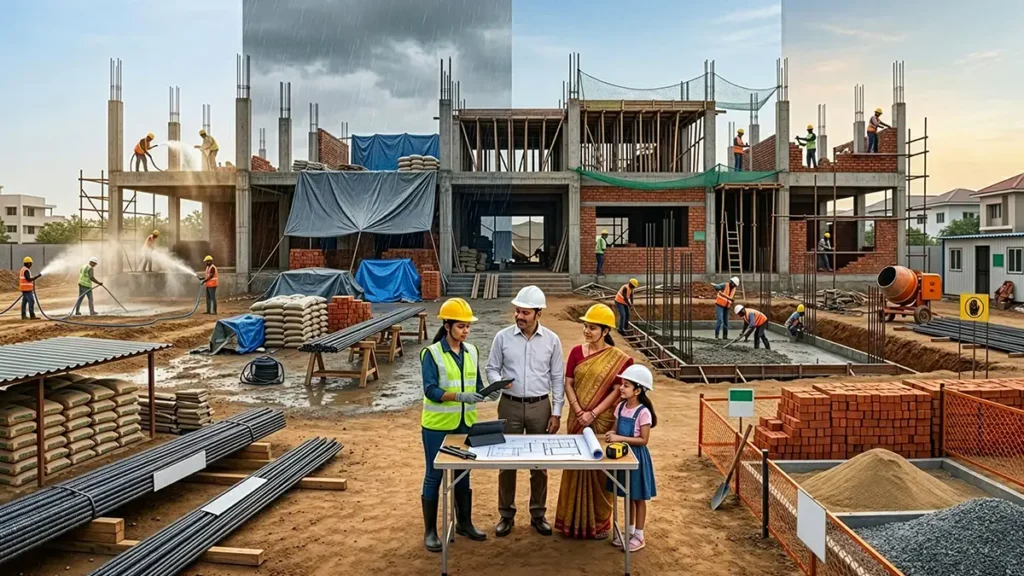
Building a home is one of the biggest decisions a family makes. The design, budget, location, contractor, cement, concrete, and TMT bars all matter. Weather also plays a big role.
In India, construction does not follow one fixed calendar for every city. A home built in Ahmedabad, Jaipur, Pune, Chennai, Guwahati, or Kochi will face different temperature, rainfall, humidity, and soil conditions. This is why the best time to build your home depends on your region, local weather, soil condition, and the stage of construction.
Still, one broad rule works for most parts of India: the post-monsoon and winter months are generally the most comfortable and practical time to begin home construction. The weather is usually more stable, site movement becomes easier, and foundation work can be planned with better control.
Here is a season-by-season guide to help you plan your home construction in India with more clarity.
Why Season Matters in Home Construction
Home construction is not just about starting work on a lucky date. Every stage needs the right working conditions.
Weather can affect:
- Excavation and foundation work
- Soil stability
- Concrete mixing, placing, and curing
- Steel storage and handling
- Masonry and plastering
- Waterproofing schedules
- Labour productivity
- Material movement and site safety
Concrete needs proper moisture control and temperature management during curing. Steel reinforcement needs correct placement, cover, and protection before concrete is poured. Heavy rain, extreme heat, waterlogging, and poor supervision can disturb the quality of work.
A good construction plan should match the season with the work stage.
October to February: Generally the Best Time to Start Construction
For many parts of India, October to February is one of the best periods to start building a home. The heavy southwest monsoon is usually over in most regions, temperatures are more manageable, and outdoor work becomes easier.
This period is especially suitable for:
- Site cleaning and marking
- Excavation
- Foundation work
- Footing and plinth work
- RCC slab planning
- Brickwork and blockwork
- Material procurement
- Steel reinforcement work
The biggest advantage of this season is better control. The site is easier to manage compared to the monsoon months. Labour productivity is usually better than peak summer. Concrete curing can also be planned more consistently with proper site supervision.
For home builders, this season gives a practical head start. If foundation work begins after the rains, the structure can move steadily through the next few months.
Things to Keep in Mind
In North India, some regions may face cold waves or fog during December and January. In Tamil Nadu and parts of the southeast coast, October to December can receive northeast monsoon rain. Before finalising the start date, check local weather patterns and speak to your engineer or contractor.
March to May: Good for Progress, Needs Heat Management
March to May is the pre-monsoon season in India. This period can be useful for construction progress, especially if major foundation work is already completed.
Common work during this season includes:
- RCC work
- Masonry
- Plastering
- Flooring preparation
- Structural steel tying
- Formwork
- Material stocking before monsoon
The challenge is heat. In many Indian cities, afternoon temperatures can rise sharply. Hot weather can increase water loss from fresh concrete. That is why concreting should be planned carefully. Early morning or late evening work windows are often more practical than afternoon pours.
Tips for Summer Construction
Keep construction materials protected from direct heat wherever possible. Plan concrete work with proper curing arrangements. Ensure enough water is available at site. Cover freshly placed concrete as advised by the engineer. Avoid rushing RCC work just to meet a date.
This is also a good time to plan steel procurement before the monsoon. Quality TMT bars are important for load-bearing RCC structures, so the choice of steel should be discussed with the structural engineer.
June to September: Monsoon Construction Needs Extra Caution
The southwest monsoon season usually falls between June and September. For most home builders, this is not the easiest time to begin foundation work.
Monsoon can create problems such as:
- Waterlogging in excavated pits
- Delays in concrete pouring
- Difficulty in material movement
- Higher chances of site accidents
- Muddy access roads
- Storage issues for cement and steel
- Poor visibility during heavy rain
- Work stoppage due to local warnings
Starting a new foundation during heavy rains can become difficult. Excavated soil may collapse in some conditions. Water accumulation can delay footing work. Concrete work also needs strict protection from rainwater and site contamination.
This does not mean all construction must stop during monsoon. It means the work should be chosen carefully.
Work That Can Be Planned During Monsoon
During rainy months, you can focus on:
- Design finalisation
- Structural drawings
- Approvals and permissions
- Material planning
- Vendor selection
- Indoor work, where safe and practical
- Covered storage planning
- Factory cut-and-bend steel requirements
- Waterproofing inspection after rain exposure
If construction is already ongoing, keep cement in dry storage, protect steel from prolonged exposure, maintain safe electrical practices, and avoid concreting during heavy rain unless the site team has proper protection and approval from the engineer.
October to December: Strong Time for Fresh Starts
October to December is often a smart time to begin construction in many parts of India. Rainfall reduces in large parts of the country, the soil begins to settle, and the weather becomes better for outdoor work.
This is a good period for:
- Starting excavation after checking soil condition
- Foundation and plinth work
- Ordering TMT bars and cement
- Planning RCC work
- Beginning masonry work
- Waterproofing checks after monsoon
For families planning a new home, this period gives a balanced window. You can finish major groundwork before peak summer arrives.
Regional Caution
South India, especially Tamil Nadu and some coastal regions, may receive rain during the northeast monsoon period. In these areas, January and February may be more suitable for starting heavy foundation work.
Best Season for Each Construction Stage
1. Planning and Approvals
Best time: Any season
Planning can happen throughout the year. Use this stage to finalise drawings, budget, soil testing, structural design, material specifications, and contractor selection.
2. Excavation and Foundation
Best time: October to February in many regions
Foundation work needs stable soil and better site access. Avoid peak monsoon unless your engineer confirms safe working conditions.
3. RCC Frame Work
Best time: October to March
RCC work needs proper steel placement, formwork, concreting, compaction, and curing. Weather should allow controlled execution.
4. Masonry and Plastering
Best time: November to March
These months usually offer better working comfort. Summer work is possible with proper water and curing practices.
5. Waterproofing
Best time: Dry weather after surface preparation
Waterproofing needs clean and dry surfaces as per product and engineer guidance. Avoid applying waterproofing during active rain.
6. Interior Work
Best time: Any season, if the structure is protected
Interior work can continue during monsoon if the building is covered, safe, and moisture is controlled.
How Weather Affects Concrete and Steel
Concrete and steel work together in RCC construction. Concrete handles compression, while steel reinforcement helps handle tension. The performance of the structure depends on correct design, good material, proper placement, and disciplined site execution.
Concrete should be transported, placed, compacted, and cured properly. Fresh concrete should not lose moisture too quickly. It should also be protected from contamination, heavy rain, and poor handling.
Steel reinforcement should be placed as per the structural drawing. Proper cover blocks, spacing, tying, and supervision are important. Before concrete covers the steel, the engineer or site supervisor should check reinforcement placement.
This is where material quality becomes important. ET TMT offers TMT bars for residential, commercial, and infrastructure projects. Their product range includes CRS TMT Bars, Refined Steel TMT Bars, Superior Quality Steel TMT Bars, Epoxy-Coated TMT Bars, and Cut & Bend TMT Bars. For a home, the right grade and type should always be selected as per structural design and engineer recommendation.
Choosing TMT Bars for Seasonal Challenges
India’s weather can be demanding. Coastal humidity, heavy rainfall, groundwater exposure, and long-term moisture contact can affect reinforcement if the wrong material or poor site practices are used.
For corrosion-prone areas, corrosion-resistant TMT bars may be considered as per project requirements. For projects where steel cutting and bending accuracy matters, ready-to-use cut-and-bend solutions can help reduce onsite handling issues.
The main point is simple: choose TMT bars based on the structure’s needs, not just price. A home is built for decades. The steel inside the concrete deserves serious attention.
Best Time to Build a Home in India: Simple Answer
For most Indian regions, October to February is generally the best time to start building a home.
This period usually offers:
- Better site access
- Lower risk of heavy rain interruptions
- More comfortable working conditions
- Better control over foundation and RCC work
- Easier material movement
- More predictable project planning
For hot regions, avoid major concrete work during peak afternoon heat. For high-rainfall regions, avoid starting excavation during active monsoon. For coastal and southeast regions, check local rainfall patterns before choosing October to December.
Final Thoughts
There is no single perfect month for every home project in India. The best time depends on your city, soil, rainfall, temperature, contractor availability, and construction stage.
A smart approach is to start with planning during the monsoon, begin foundation work after the rains, complete major structural work during cooler months, and prepare for summer with proper curing and material protection.
Good timing can make construction smoother. Good material can make the structure stronger. Good supervision can make both work together.
When you build your home, build it with the right plan, the right season, and the right steel.