
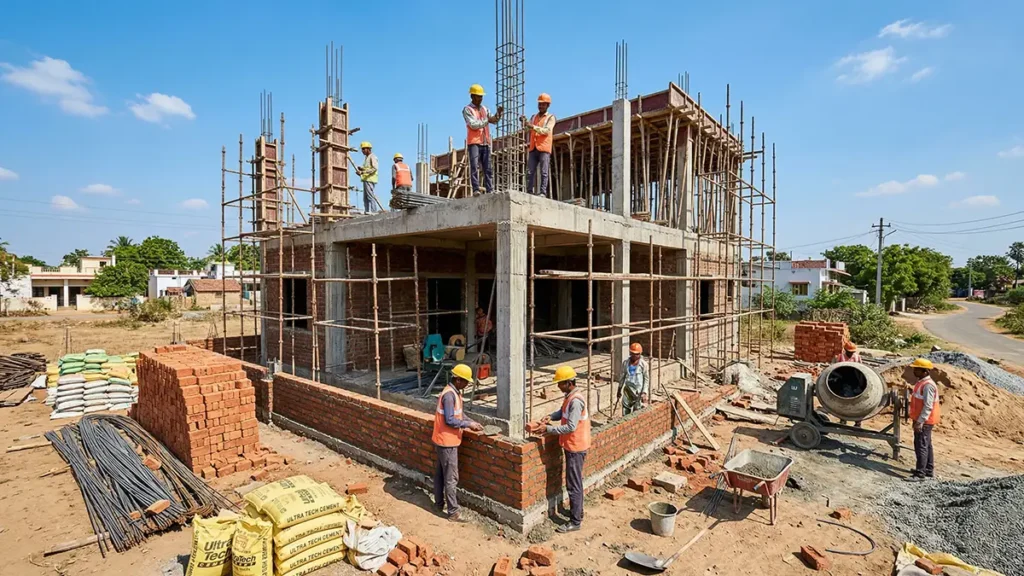
Building a home is one of the most important investments a family makes. But did you know that the season you start construction can affect everything from foundation strength to project cost and timeline?
In India – where weather varies widely across regions – planning the best time to build a house is not just about convenience. It’s about durability, safety, and smart resource use.
Let’s walk through the seasons, key challenges, and practical planning tips so you make the right choice for your home project.
Why Timing Matters
Climate influences construction in several ways:
- Rain affects soil and foundation work
- Heat impacts concrete curing
- Cold slows construction activity
- Weather affects labor availability and cost
Choosing the right season improves:
✔ work efficiency
✔ material performance
✔ structural quality
✔ long‑term durability
1. Winter (October to February) – Best Overall Season
For most parts of India (North, Central, and West), winter is the ideal time to start construction.
Why Winter Works Well
✔ Mild temperatures help concrete curing
✔ Dry weather prevents water‑related delays
✔ Ground conditions are stable for excavation
✔ Labor is available and schedules are predictable
This season allows:
- foundation laying
- brickwork
- reinforcement and concreting
to proceed smoothly with minimal weather interruption.
Note: In very cold regions like hills (e.g., Shimla, Manali), temperatures can fall below normal curing limits. Special care or additives may be needed for concrete performance.
2. Post‑Monsoon / Early Winter (September to October)
This short window – right after monsoon and before the winter chill is also favorable.
Why?
- Soil is moist but stable
- Ground has settled after rain
- Temperature is moderate
For regions with short monsoons, this is often the sweet spot to begin foundation work before winter sets in.
3. Monsoon (June to September) -Be Cautious
Monsoon season in India brings heavy rainfall and high humidity, especially in the West Coast, East, and Central regions.
Challenges in Monsoon
🔹 Soil becomes highly unstable
– foundation work gets delayed
– water‑logged trenches increase risk
🔹 Cement and steel storage problems
🔹 Concrete curing becomes difficult
– excessive water reduces strength
🔹 Site access and labor productivity drops
📌 Construction Tip:
If unavoidable, schedule only:
- planning and procurement
- site clearance
- design finalization
during monsoon, and postpone major structural work.
4. Summer (March to May) – Manage Smartly
Summer in India can be intense, especially in central and northern plains, with temperatures often crossing 40°C.
What Affects Construction
🔥 Fast moisture loss during concrete curing
🔥 Worker fatigue and heat stress
🔥 Shorter effective working hours
How to Mitigate
✔ plan early morning and late afternoon work
✔ use proper curing methods
✔ ensure shade and hydration for workers
Regional Differences Matter
India’s diverse climate means the “best season” can change depending on where you are:
Himalayan & Hill Regions
- Winters are very cold
- Best season: late spring to early autumn
- Concrete work requires additives or heated curing in extreme cold
Coastal Regions
- High humidity and monsoon impact
- Best season: December to March
- Avoid heavy rains for concrete and foundation work
Northern Plains
- Winter and post‑monsoon are ideal
- Summers need careful curing practices
Central & Southern India
- Mild winters are favorable
- Summer and monsoon require special planning
Construction Planning Tips (Proven & Practical)
Whether you start in winter, summer, or post‑monsoon, these smart practices will improve quality and performance.
1. Prepare a Weather‑Responsive Schedule
Break the project into phases:
✔ site surveys
✔ foundation work
✔ reinforcement and TMT placement
✔ brickwork
✔ finishing
Match them to favorable climatic windows.
2. Focus on Proper Concrete Curing
Concrete strength depends on curing conditions. Best practice includes:
- maintaining moisture for at least 7–14 days
- shading exposed surfaces
- using curing compounds in dry heat
Proper curing ensures long‑term structural integrity – a key to foundation performance.
3. Store Materials Safely
Weather affects materials differently:
✔ TMT bars – avoid exposure to standing water and rust
✔ Cement – keep in dry, elevated storage
✔ Sand/aggregate – cover to prevent moisture absorption
Good storage protects quality and reduces waste.
4. Plan for Labor and Equipment Availability
Certain seasons (like winter) are high‑demand for construction teams.
🔹 Book labor and machinery well in advance
🔹 Coordinate deliveries around weather forecasts
This keeps the schedule predictable and cost‑efficient.
Why Season + Quality Reinforcement Matter Together
No matter when you build, the strength of your home foundation and frame depends on:
✔ quality materials
✔ proper reinforcement
✔ disciplined execution
This is where ET TMT rebars make a difference – delivering consistent strength, ductility, and performance across India’s varied weather cycles.