
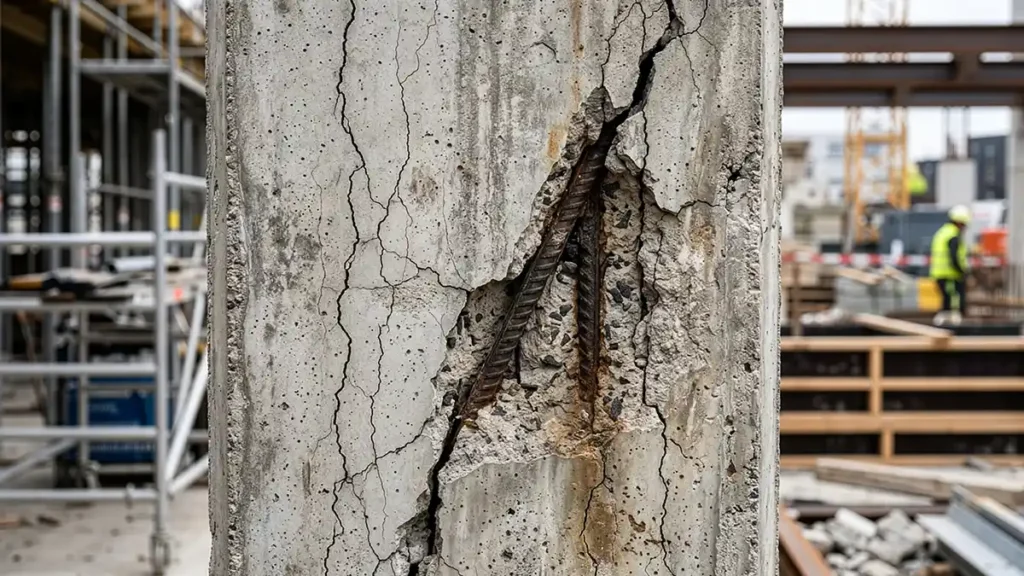
Reinforced Cement Concrete (RCC) columns are the backbone of any structure. They carry vertical loads and ensure stability, making their integrity absolutely critical. However, early cracking in RCC columns is a common issue seen across construction projects and if ignored, it can compromise structural safety, durability, and long-term performance.
In this blog, we explore why RCC columns crack early, the underlying causes, and how high-quality materials and practices can prevent these issues.
What Are RCC Column Cracks?
Cracks in RCC columns are visible signs of stress, weakness, or deterioration in the concrete or reinforcement. They may appear in different forms such as diagonal, horizontal, vertical (splitting), or along reinforcement lines due to corrosion.
Even small cracks can lead to reduced strength, durability issues, and corrosion of steel reinforcement, making early detection crucial.
Major Reasons Why RCC Columns Crack Early
1. Poor Quality of Materials
One of the most common reasons for early cracking is the use of substandard raw materials.
- Low-grade cement or aggregates
- Improper water-cement ratio
- Contaminated mixing water
Material deficiencies weaken the concrete matrix and increase shrinkage, leading to cracks at an early stage.
2. Inadequate Reinforcement (Steel Issues)
Steel reinforcement plays a vital role in handling tensile stresses. Cracks often occur when:
- Reinforcement is insufficient
- Improper spacing or placement is used
- Steel quality is compromised
Inadequate reinforcement reduces load-bearing capacity and leads to diagonal or splitting cracks.
3. Poor Construction Practices
Even with good materials, faulty construction methods can cause premature cracking:
- Improper compaction
- Honeycombing
- Poor shuttering
- Incorrect curing methods
Defective construction is one of the primary contributors to cracks in RCC columns.
4. Improper Curing of Concrete
Curing is essential for strength development. When curing is insufficient:
- Moisture evaporates too quickly
- Concrete shrinks unevenly
- Early-age tensile stress increases
This leads to plastic shrinkage cracks, especially in hot and dry conditions.
5. Overloading or Design Errors
Cracks may appear when columns are subjected to loads beyond their capacity due to:
- Incorrect structural design
- Change in usage of building
- Underestimation of load factors
This results in stress cracks like diagonal or horizontal cracks affecting structural integrity.
6. Foundation Settlement
Uneven or differential settlement of soil can induce stress in columns.
- Weak soil conditions
- Improper foundation design
- Water seepage in soil
These factors cause stress redistribution, leading to cracking in columns.
7. Corrosion of Reinforcement Steel
Corrosion is a silent but severe cause of early cracks.
- Rust expansion creates internal pressure
- Cracks appear along reinforcement lines
- Eventually leads to spalling of concrete
Corrosion-related cracks worsen over time and accelerate structural deterioration.
8. Shrinkage and Creep Effects
Concrete naturally undergoes volume changes:
- Drying shrinkage
- Thermal expansion/contraction
- Long-term creep under load
When restrained, these movements create tensile stresses, resulting in cracks.
Types of Early RCC Column Cracks
Understanding crack patterns helps identify the root cause:
- Diagonal Cracks: Due to insufficient load capacity
- Horizontal Cracks: Often near beam-column joints
- Splitting Cracks: Due to inadequate reinforcement
- Corrosion Cracks: Along reinforcement lines
Risks of Ignoring RCC Column Cracks
Ignoring early cracks can lead to:
- Reduced load-bearing capacity
- Increased maintenance costs
- Corrosion of reinforcement
- Structural failure in extreme cases
How to Prevent Early Cracking in RCC Columns
Use High-Quality Steel and Materials
Choosing premium-grade reinforcement steel ensures better bonding, strength, and durability – reducing the risk of cracks.
Follow Proper Design Standards
- Adequate reinforcement detailing
- Correct load calculations
- Soil testing before foundation design
Ensure Proper Construction Practices
- Proper mixing and compaction
- Skilled workmanship
- Accurate formwork
Maintain Proper Curing
- Keep concrete moist for sufficient time
- Avoid rapid drying
- Protect from extreme weather
Regular Inspection & Maintenance
Early detection helps prevent minor cracks from becoming major structural issues.
Conclusion
Early cracking in RCC columns is not just a surface-level issue – it’s a warning sign of deeper structural concerns. From poor material quality to design flaws and environmental factors, multiple reasons can contribute to this problem.
The key to preventing early cracks lies in using high-quality reinforcement steel, following best construction practices, and ensuring proper curing and design execution.
For long-lasting, safe, and high-performance structures, every component – especially steel – must meet the highest standards of quality and reliability.