
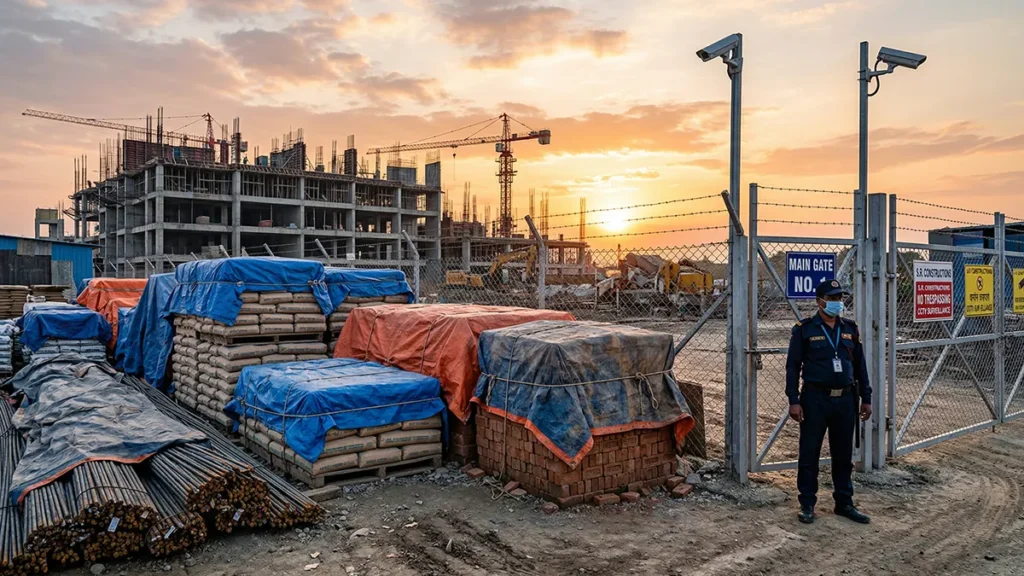
Let’s start with a simple question:
Have you ever calculated how much material loss actually costs a construction project?
From steel and cement to tools and fixtures – material theft and damage are among the most common challenges on construction sites in India.
And the impact is not just financial. It affects:
- project timelines
- structural quality
- overall site efficiency
So, how do you protect construction materials effectively?
Let’s break it down.
Why Material Protection Matters
Construction materials are not just inventory – they are the foundation of your structure.
Loss or damage can lead to:
- compromised quality
- increased costs
- project delays
Site safety guidelines and construction management practices strongly emphasize secure storage and monitoring as critical components of project execution.
1. Controlled Site Access
First step – control who enters your site.
Ask yourself:
Can anyone walk into your construction site?
Unrestricted access increases the risk of:
- theft
- unauthorized handling
- accidental damage
Best practice:
- install entry/exit checkpoints
- maintain visitor logs
- use ID verification for workers
This aligns with standard construction site safety practices, where access control is a key risk management tool.
2. Proper Material Storage Solutions
Where you store materials matters as much as what you store.
For steel (including TMT bars):
- keep on raised platforms
- avoid direct ground contact
- protect from water accumulation
For cement:
- store in dry, covered areas
- avoid moisture exposure
Improper storage can lead to:
- corrosion
- strength loss
- material wastage
Good material storage solutions ensure both quality and longevity.
3. Use of Secure Storage Zones
Not all materials should be kept in open areas.
High-value items like:
- steel bars
- tools
- electrical components
should be stored in:
- locked sheds
- designated storage zones
Segregating materials based on value and usage reduces risk significantly.
4. Regular Inventory Checks
Here’s a simple habit that makes a big difference:
Track what comes in and what goes out.
Maintain:
- daily material logs
- stock registers
- usage tracking
This helps:
- identify discrepancies early
- prevent unnoticed losses
- improve accountability
Inventory control is a standard recommendation in construction project management.
5. On-Site Surveillance and Monitoring
Would you leave valuable materials unmonitored?
Modern construction sites increasingly use:
- CCTV cameras
- night lighting
- security personnel
These act as both:
✔ deterrents
✔ monitoring tools
Visibility reduces the chances of theft.
6. Protect Materials from Environmental Damage
Theft is one risk. Weather is another.
Construction materials are vulnerable to:
- rain
- humidity
- extreme heat
For example:
- steel can corrode if exposed to moisture
- cement can lose strength when exposed to air
Preventive steps:
- cover materials properly
- use waterproof sheets
- ensure proper drainage
These are essential construction site safety tips to maintain material quality.
7. Schedule Deliveries Strategically
Timing matters more than you think.
Avoid:
- bulk deliveries too early
- long storage durations on-site
Instead:
- plan deliveries as per project phases
- use materials soon after arrival
This reduces exposure time and risk.
8. Train Workers on Material Handling
Sometimes, damage is not theft – it’s mishandling.
Workers should be trained to:
- handle steel properly
- avoid dropping or bending materials unnecessarily
- follow storage protocols
Awareness reduces accidental losses.
9. Choose Reliable Suppliers
Here’s something often overlooked:
The quality of materials starts with the source.
Working with trusted suppliers ensures:
- consistent quality
- proper documentation
- reduced risk of counterfeit materials
This is especially critical for materials like TMT bars, where quality directly impacts structural safety.
10. Mark and Identify Materials
A simple but effective step:
Mark your materials.
This helps:
- identify ownership
- discourage theft
- track usage
Branded and certified materials are also easier to verify and manage on-site.
So, How Do You Prevent Theft at a Construction Site?
Let’s simplify everything:
✔ control site access
✔ use proper storage systems
✔ monitor inventory
✔ install surveillance
✔ protect from weather
✔ train workers
✔ choose trusted suppliers
Final Thoughts: Protection Is Part of Construction
Construction is not just about building – it’s about managing what goes into building.
Every material you protect:
- saves cost
- ensures quality
- supports structural safety
Because in the end – A strong structure depends on how well its materials are handled before construction even begins.