
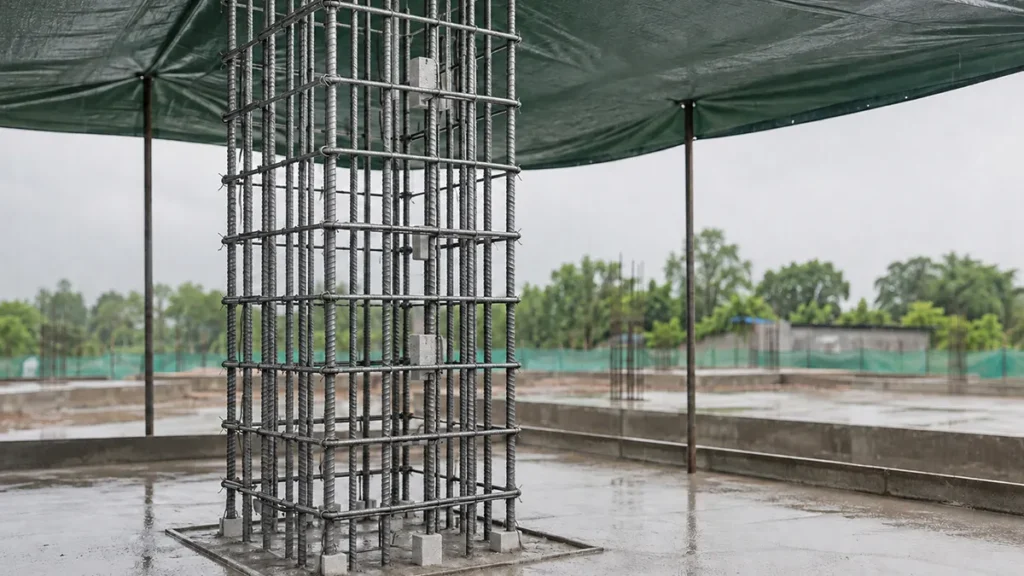
Monsoon brings welcome relief from the summer heat, but for construction sites, it also brings a practical challenge: moisture. Steel reinforcement stored in the open can remain wet for long periods, while waterlogging, mud, humidity, and repeated wet-dry cycles can create conditions that encourage corrosion.
For builders, contractors, site engineers, and homeowners, knowing how to protect steel from rust during the rainy season can help maintain reinforcement quality and support the long-term durability of the structure.
The good news is that rust prevention during monsoon largely comes down to disciplined storage, handling, inspection, and concreting practices.
Why Does Steel Rust Faster During Monsoon?
Rust develops when iron in steel reacts with oxygen in the presence of moisture. During monsoon, construction steel may face prolonged exposure to rainwater and humid air.
Site conditions can add to this exposure. Reinforcement may come into contact with wet soil, accumulated water, mud, salts, or other contaminants while waiting for fabrication or concreting.
The condition of reinforcement matters because reinforced concrete relies on effective bonding between steel and concrete. Industry guidance recommends keeping reinforcement free from materials such as oil, grease, mud, loose mill scale, and excessive flaky rust before concrete placement.
Once reinforcement is properly embedded, good-quality concrete creates an alkaline environment that helps form a protective passive layer around the steel. Concrete quality, adequate cover, and crack control all play an important role in reducing corrosion risk over the service life of a structure.
How to Protect Steel from Rust During Monsoon
A few practical site precautions can significantly reduce unnecessary moisture exposure.
1. Store TMT Bars Above Ground Level
One of the simplest precautions is to keep reinforcement away from direct contact with the ground.
Use raised wooden sleepers, concrete blocks, racks, or suitable platforms to elevate TMT bars. This helps prevent contact with wet soil, mud, and standing water.
The storage area should also have suitable drainage so rainwater can move away instead of collecting around the steel.
Site tip: Select a slightly elevated storage location before the monsoon begins rather than shifting large quantities of reinforcement after waterlogging starts.
2. Cover Stored Steel Properly
When TMT bars have to remain outdoors, provide suitable weather protection.
Use a waterproof sheet, tarpaulin, or temporary covered storage arrangement that shields the reinforcement from direct rainfall while allowing sensible ventilation.
Check the covering after heavy rain or strong winds. A torn or displaced sheet can leave part of the stock exposed for several days without the site team noticing.
3. Keep Reinforcement Away from Mud and Contaminants
Rain can turn an organised construction site into a muddy one quickly.
Keep steel away from:
- Mud and wet soil
- Oil and grease
- Construction chemicals
- Debris and waste
- Contaminated standing water
A clean reinforcement surface supports proper interaction between the bar and surrounding concrete. The Concrete Society specifically highlights protection from grease, oil, mud, excessive flaky rust, and loose mill scale.
4. Improve Drainage Around the Steel Storage Area
A good cover protects steel from rain falling from above. Proper drainage manages water collecting below.
Before peak monsoon conditions arrive, inspect the storage yard and create clear paths for runoff. Temporary drains, graded surfaces, or suitable platforms can help keep water from accumulating around reinforcement stock.
Pay additional attention to low-lying areas of the site where water tends to collect after every shower.
5. Inspect Steel Before Fabrication and Concreting
Visual inspection becomes especially useful during monsoon.
Before reinforcement is cut, bent, tied, or placed inside formwork, check its surface condition. Light surface rust and heavy corrosion require different responses.
Minor surface rust can occur when reinforcement is exposed to weather. Loose, flaky rust and significant pitting deserve closer attention. Industry guidance notes that steel stored outdoors for long periods should be checked where corrosion appears severe, particularly when pitting or reduction in bar diameter is suspected.
Where the condition of a bar raises structural concerns, involve the project engineer or qualified technical professional before using it.
6. Clean Excessive Loose Rust Before Concrete Placement
When loose or flaky rust is present, suitable mechanical cleaning may be required.
A wire brush can help remove loose material from affected reinforcement, depending on the condition and project specifications. The objective is to prepare the reinforcement appropriately for concrete placement while preserving the intended ribs and bar dimensions.
Avoid aggressive cleaning methods without technical guidance, especially where corrosion appears deep.
7. Avoid Leaving Fixed Reinforcement Exposed for Long Periods
Steel becomes harder to protect once reinforcement cages have been assembled.
Columns, beams, slabs, and starter bars may remain exposed when construction schedules are interrupted by repeated rainfall. Extended weather exposure can encourage additional surface corrosion.
Construction guidance recommends protecting fixed reinforcement when it will remain exposed to weather for an extended period.
Plan reinforcement work and concreting schedules around realistic weather windows wherever possible.
8. Maintain the Specified Concrete Cover
Long-term steel protection continues after the concrete is poured.
Concrete cover creates a physical barrier between reinforcement and the surrounding environment. Dense concrete, appropriate cover, and controlled cracking form important lines of defence against corrosion-related deterioration.
Use appropriate cover blocks and follow the structural drawings and applicable specifications for the project.
9. Pay Attention to Concrete Quality and Placement
Concrete itself plays a major role in protecting reinforcement.
Proper mix design, placement, compaction, cover, and curing help create durable reinforced concrete. Poorly compacted or highly permeable concrete can make it easier for moisture and aggressive substances to reach embedded reinforcement over time.
Monsoon concreting therefore requires careful site planning, particularly around water accumulation, formwork condition, concrete placement, and curing practices.
10. Consider Corrosion-Resistant Reinforcement for Demanding Environments
Some structures face greater corrosion exposure because of their location or operating environment.
Coastal areas, marine infrastructure, industrial environments, and projects exposed to chloride-rich conditions may benefit from reinforcement systems designed with additional corrosion resistance.
ET TMT offers CRS TMT Bars, manufactured with copper, chromium and other specified alloying additions to enhance corrosion resistance and pitting-corrosion performance.
ET also offers fusion-bonded epoxy-coated TMT bars, where the epoxy layer acts as a barrier against corrosive elements, including chloride ions. The company positions these bars for infrastructure and construction applications, with particular relevance to marine environments.
Product selection should follow the structural design, environmental exposure conditions, applicable standards, and project engineer’s specifications.
Monsoon Steel Protection Checklist
Before and during the rainy season, site teams can use this quick checklist:
- Store TMT bars on raised supports
- Keep reinforcement away from wet soil and mud
- Provide suitable waterproof covering
- Maintain drainage around the storage area
- Inspect stored steel regularly
- Keep reinforcement free from oil, grease, and contaminants
- Remove excessive loose or flaky rust where required
- Check heavily corroded or pitted bars before use
- Protect assembled reinforcement during construction delays
- Follow specified concrete cover requirements
- Maintain proper concrete placement and compaction practices
- Consider corrosion-resistant reinforcement where exposure conditions demand it
Choosing Quality TMT Steel for Monsoon Construction
Good site practices work best when they begin with reinforcement manufactured to appropriate quality standards.
IS 1786 covers high-strength deformed steel bars and wires used for concrete reinforcement in India, including requirements related to chemical composition, mechanical properties, dimensions, surface characteristics, testing, and identification.
Electrotherm’s ET TMT portfolio includes standard TMT reinforcement as well as CRS and epoxy-coated options for projects with different durability requirements. The company states that its TMT bars are produced through automated manufacturing processes and undergo physical and chemical quality testing.
For contractors and project teams evaluating how to protect steel from rust, the approach should cover the full journey of reinforcement: selecting the appropriate steel, storing it correctly, protecting it during site work, inspecting it before placement, and ensuring good concrete practices.
Final Thoughts
Monsoon construction becomes easier to manage when steel protection is built into everyday site routines.
Raised storage, proper covering, effective drainage, regular inspection, clean reinforcement, appropriate concrete cover, and timely concreting can help limit unnecessary moisture exposure. For projects facing aggressive environmental conditions, corrosion-resistant reinforcement can provide an additional durability measure when specified by the project designer.
With careful material selection and disciplined site handling, construction teams can keep reinforcement ready for its most important job: supporting a durable RCC structure for years to come.
Looking for TMT reinforcement for your project? Explore ET TMT Bars by Electrotherm Steel and choose the reinforcement solution suited to your structural and environmental requirements.