
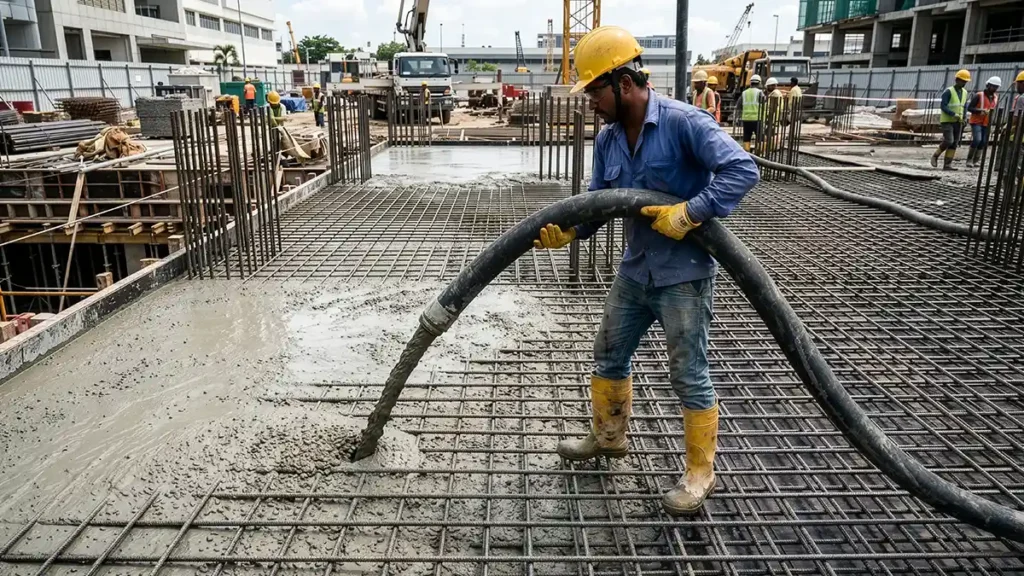
Reinforced concrete is the backbone of modern infrastructure but its long-term performance depends heavily on the type of reinforcement used. Traditionally, carbon steel rebar has been the industry standard. However, stainless steel rebar is rapidly emerging as a superior alternative, especially in demanding environments.
In this blog, we explore how stainless steel rebar is used in reinforced concrete construction, its applications, and why it’s becoming the preferred choice for durable, high-performance structures.
Understanding Reinforced Concrete
Concrete is strong in compression but weak in tension. To overcome this limitation, reinforcing bars (rebar) are embedded within concrete to improve tensile strength and structural integrity.
In reinforced concrete:
- Concrete handles compressive loads
- Rebar handles tensile stresses
- Together, they form a composite material capable of withstanding complex loads
What is Stainless Steel Rebar?
Stainless steel rebar is a corrosion-resistant reinforcement bar made from an alloy containing chromium (and often nickel), which forms a protective oxide layer on its surface.
This unique composition makes it significantly more durable than conventional steel, especially in aggressive environments such as:
- Coastal regions
- Chemical plants
- Industrial zones
- Bridges and marine structures
How Stainless Steel Rebar is Used in Construction
1. Placement Within Concrete Structures
Just like conventional rebar, stainless steel rebar is:
- Cut, bent, and tied into reinforcement cages
- Positioned according to structural design
- Held in place using spacers or chairs
- Embedded before concrete pouring
Proper placement ensures:
- Uniform load distribution
- Strong bonding with concrete
- Long-term structural stability
2. Use in Different Structural Elements
Stainless steel rebar is used across various construction components:
a) Slabs and Floors
- Reinforces concrete slabs against bending and cracking
- Ensures durability in high-traffic or industrial floors
b) Columns and Beams
- Provides tensile strength in load-bearing members
- Enhances safety in high-rise buildings
c) Foundations
- Used in footings and pile caps for long-term strength
- Ideal for areas with high moisture or soil corrosion
d) Walls and Retaining Structures
- Supports lateral loads and prevents cracking
- Maintains structural integrity under pressure
3. Use in Harsh and Corrosive Environments
One of the biggest applications of stainless steel rebar is in environments where corrosion is a major concern.
- Marine structures exposed to saltwater
- Bridges exposed to de-icing salts
- Industrial plants exposed to chemicals
Stainless steel rebar requires much higher chloride levels to initiate corrosion, significantly extending service life.
4. Integration with Concrete Properties
Stainless steel rebar works seamlessly with concrete because:
- It has a similar thermal expansion coefficient
- It bonds effectively with concrete surfaces
- It maintains structural integrity under temperature changes
Key Advantages in Reinforced Concrete
1. Superior Corrosion Resistance
The chromium layer prevents rust formation, even in aggressive environments.
2. Extended Service Life
Structures can last 100+ years with minimal maintenance.
3. High Strength and Durability
Stainless steel rebar offers excellent tensile strength and ductility for heavy-load applications.
4. Reduced Maintenance Costs
Lower repair and replacement needs make it cost-effective over the lifecycle.
5. Sustainability
- Fully recyclable
- Reduces resource consumption over time
Installation Process
- Design Planning – Structural engineers define rebar layout
- Cutting & Bending – Rebars are shaped as per design
- Placement – Positioned using spacers for correct cover
- Tying – Bars are tied to maintain alignment
- Concrete Pouring – Concrete is cast around the reinforcement
This process ensures strong bonding and optimal performance.
Where Stainless Steel Rebar is Most Commonly Used
- Bridges and highways
- Coastal and marine structures
- Water treatment plants
- Parking structures
- Industrial and chemical facilities
- High-rise buildings
Its use is growing rapidly in infrastructure projects where durability and lifecycle cost matter more than initial cost.
Why Stainless Steel Rebar is the Future
Corrosion is one of the biggest causes of structural deterioration worldwide. When steel corrodes, it expands and cracks the surrounding concrete, weakening the structure.
Stainless steel rebar eliminates this problem at the root – making it a future-ready solution for resilient infrastructure.
Conclusion
Stainless steel rebar plays a critical role in modern reinforced concrete construction by enhancing durability, strength, and resistance to environmental damage. While the initial investment may be higher, its long-term benefits especially in terms of lifespan and reduced maintenance – make it a smart and sustainable choice.
For companies like Electrotherm Steel, focusing on high-quality stainless steel solutions means contributing to stronger, safer, and longer-lasting infrastructure.